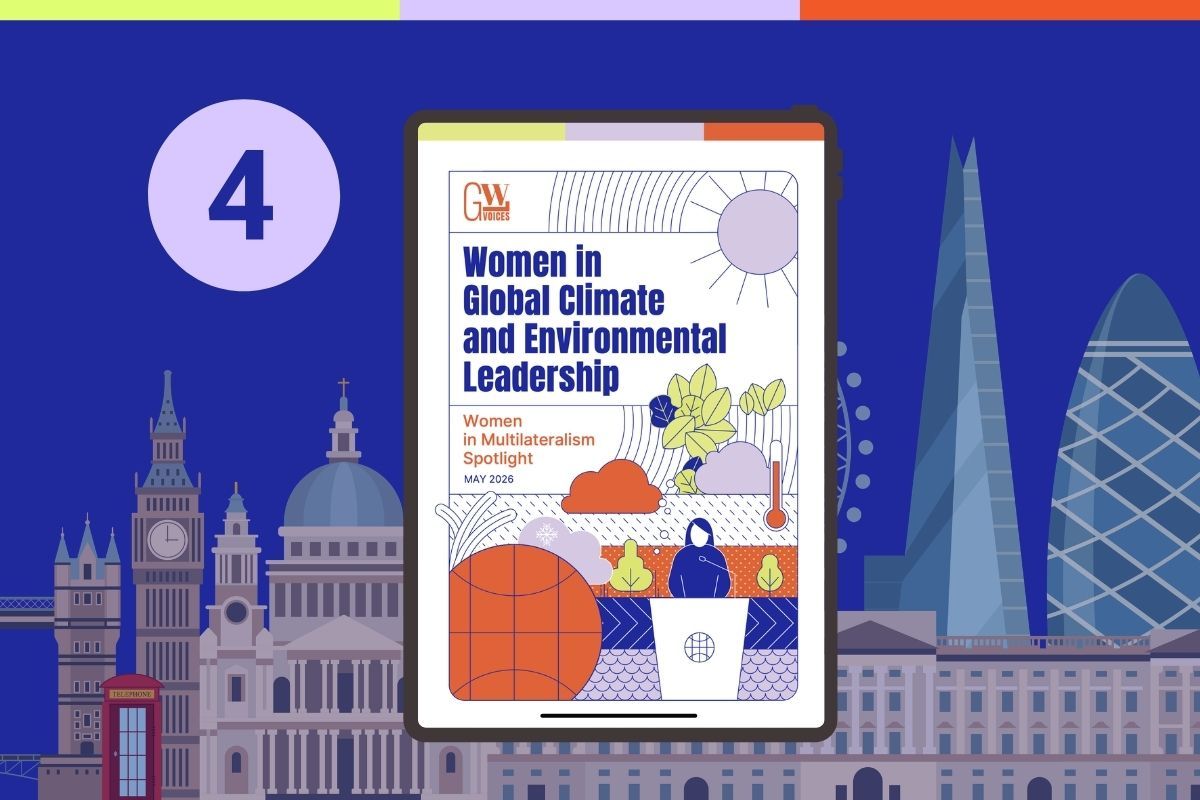
4 Key Insights from the Spotlight: Women in Global Climate and Environmental Leadership
Share
Climate change, biodiversity loss, and land degradation are among the defining challenges of our time. Yet while women are often on the frontlines of climate impacts, they remain underrepresented in many of the institutions where the most consequential climate and environmental decisions are made.
The latest Women in Global Climate and Environmental Leadership spotlight by GWL Voices examines women’s participation across the three Rio Conventions—the United Nations Framework Convention on Climate Change (UNFCCC), the Convention on Biological Diversity (CBD), and the United Nations Convention to Combat Desertification (UNCCD)—as well as other key environmental organizations and climate funds. The findings reveal both meaningful progress and persistent barriers to women’s leadership.
“Women are not just the victims of the climate and nature crisis, we're among its most experienced responders, it's most consistent advocates, and when given the chance, it's most effective leaders” Mary Robinson
1. Representation decreases as influence increases, especially at the highest leadership levels
One of the clearest patterns emerging from the research is that women’s representation tends to decline as positions become more influential. While women are highly represented in roles dedicated to advancing gender equality, such as Gender Focal Points, they remain significantly less represented in positions that shape broader institutional priorities, national negotiating strategies, and overall governance agendas.
This imbalance becomes most visible at the very top of decision-making structures. Across the history of COP Presidencies, women have occupied only a minority of these positions: since 1995, just over one quarter of all climate COP Presidents have been women, while the Desertification Convention shows the lowest level of representation, with only 12% of Presidencies held by women. Although women leaders have played important roles in advancing international environmental cooperation, their appointments remain sporadic rather than systematic.
Together, these findings reveal a persistent gap between participation and power. Women are increasingly included within institutions and gender-related processes, yet they continue to face significant barriers to accessing the most influential leadership positions where strategic decisions are made and priorities are set.
2. Progress is possible, but it is uneven
Not all climate and environmental institutions perform equally when it comes to gender representation.
Among the three Rio Conventions, the Convention on Biological Diversity (CBD) stands out as the strongest performer, achieving near gender parity across several key roles at its most recent Conference of the Parties (COP). This demonstrates that more balanced representation is achievable when institutional cultures, practices, and leadership pathways support inclusion.
At the same time, significant gaps remain across other conventions, particularly in senior leadership positions. Progress is real, but it is neither automatic nor guaranteed.
3. Regional inequalities shape access to leadership
Gender inequality in climate governance does not exist in isolation. It intersects with regional and geopolitical disparities.
The spotlight finds significant differences in women’s participation across regions. Some regions approach gender balance in climate and environmental leadership, while others continue to face substantial barriers to representation. These disparities become even more pronounced in leadership roles, where women are consistently less likely to lead delegations than to participate in them.
Ensuring more inclusive climate governance therefore requires addressing both gender-based and structural regional inequalities.
4. Institutional policies matter
Representation is not determined solely by individual choices or qualifications. Institutional structures play a critical role in shaping who enters, remains, and advances within organizations.
The spotlight’s review of policies across climate and environmental institutions shows that many organizations have adopted commitments related to gender equality, recruitment practices, workplace culture, and anti-harassment measures. However, implementation remains uneven, and relatively few institutions provide transparent reporting or structured leadership pathways designed to support women’s advancement.
The findings suggest that meaningful change requires more than commitments—it requires accountability, monitoring, and sustained institutional reform.
Looking Ahead
The spotlight presents a nuanced picture of women’s leadership in climate and environmental governance. Progress has been made, and examples of success demonstrate that change is possible. Yet significant barriers remain, particularly in the highest levels of leadership.
Building a more inclusive climate governance system will require sustained commitment from governments, international organizations, and multilateral institutions. Moving from representation to leadership—and from commitments to implementation—will be essential to ensuring that the institutions shaping our environmental future fully reflect the diversity of the people they serve.