From Geneva to Jeju: Public Dialogue and the Future of Multilateralism
Share
As the selection of the next United Nations Secretary-General gathers pace, candidates are presenting their visions in public before global audiences. Over the course of a few weeks, two international debates offered a rare opportunity to hear how those seeking the organization's highest office understand the challenges facing the United Nations and the leadership required to address them.
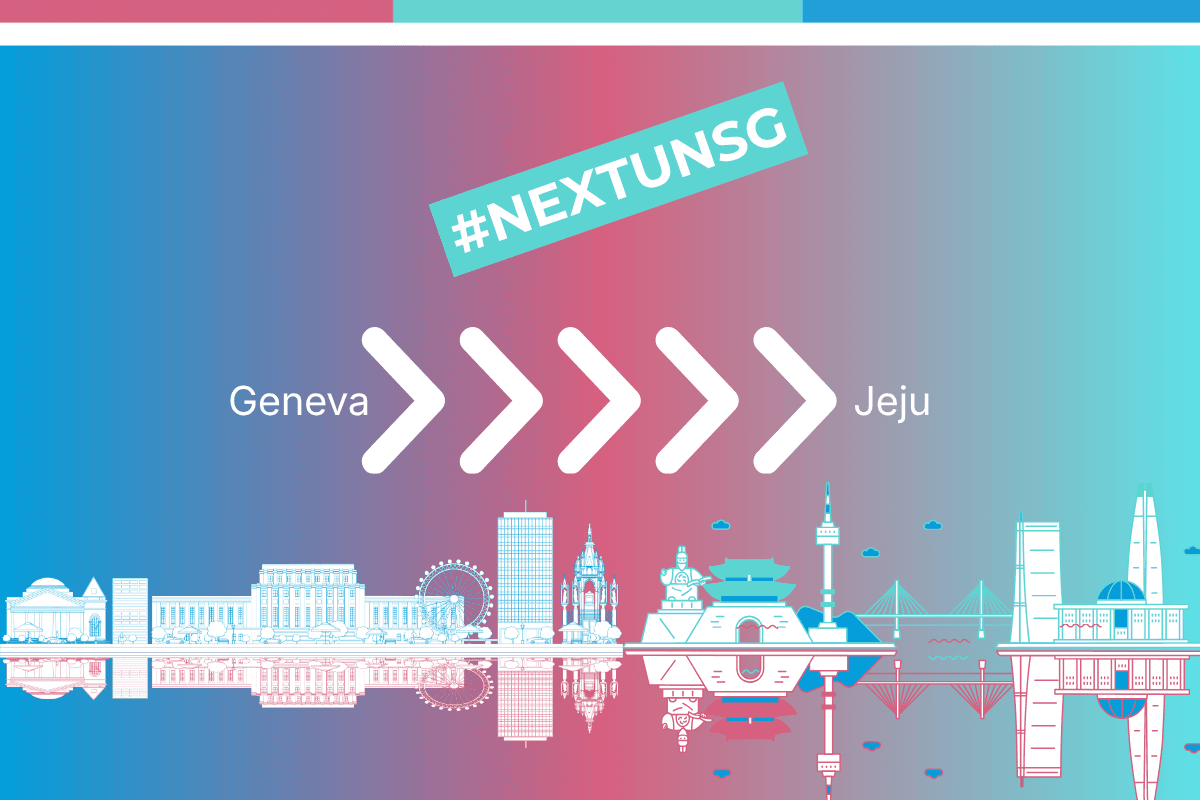
The choice of venues carried its own symbolism. The first debate took place at Geneva’s Maison de la Paix, one of the historic homes of multilateral diplomacy. The second was held during the Jeju Forum for Peace and Prosperity on South Korea’s Jeju Island, internationally recognized as the Island of World Peace. Together, these settings reflected a shared aspiration: to strengthen international cooperation at a time when armed conflicts are multiplying, geopolitical tensions are rising, climate impacts are intensifying, and trust in international institutions is under pressure.
Geneva and Jeju formed part of an emerging effort to bring one of the United Nations’ most important leadership transitions into the public sphere. Rather than taking place exclusively through diplomatic exchanges behind closed doors, these conversations invited candidates to explain their priorities, respond to questions from diverse audiences, and engage directly with one another. In doing so, they offered a genuine public service: opening a decision that affects everyone to the scrutiny, and participation, of civil society.
Opening the Selection Process
This openness should not be taken for granted. The 2016 selection process introduced important advances, including public dialogues with candidates and greater access to information about the process. Yet many of those innovations remain practices rather than formal requirements. They depend on continued commitment from Member States and, increasingly, from civil society organizations, academic institutions, former UN officials, and partners willing to create spaces for public engagement where the formal process does not necessarily provide them.
In that sense, the Geneva and Jeju debates served a broader public purpose. They did not seek to influence the outcome of the selection process or endorse particular candidates. Instead, they sought to make the conversation around the next Secretary-General more accessible, more informed, and more connected to the people in whose name the United Nations was founded: “We the Peoples.”
A New Public Space for Dialogue
The debates themselves reflected that commitment. Both were livestreamed to international audiences, bringing together participants from well beyond diplomatic circles, including students, researchers, representatives of civil society, local governments, international organizations, and the private sector.
Equally important was the format itself. Previous public appearances by candidates during this selection cycle had largely consisted of individual interviews. Geneva marked the first opportunity for candidates to share the stage in an open dialogue, responding not only to moderators and audience questions but also to one another's ideas. Jeju continued that conversation while broadening the range of voices on stage, as candidates who had not participated in Geneva were able to join the dialogue and explore new dimensions of the future of multilateral cooperation.
In Jeju, former Secretary-General Ban Ki-moon opened the debate by reflecting on his own experience seeking the office two decades ago. At the time, he noted, there was “no public stage where candidates could transparently present and contest their visions before the world's people.” His remarks underscored how significant these spaces have become, and how important it is to protect and normalize them as part of future selection processes.
What emerged across both debates was not a competition built around sharp political divisions. The atmosphere remained notably respectful throughout. Candidates frequently acknowledged one another's arguments, expanded on ideas already raised, and approached disagreements with a collaborative spirit that reflected the nature of the office they seek: the ability to listen, build trust, and sustain dialogue is therefore not separate from the role itself but one of its defining responsibilities.
Visions for the United Nations
The themes explored in Geneva and Jeju reflected different emphases. The Geneva debate focused on strengthening multilateralism through the United Nations’ three pillars of peace and security, sustainable development, and human rights. In Jeju, candidates considered how multilateralism itself might be reimagined for a changing world.
Across both debates, one question surfaced repeatedly: what kind of United Nations does today’s world need?
The answers revealed broad agreement on the organization's enduring relevance, even as candidates differed in their priorities for reform. María Fernanda Espinosa argued that the United Nations does not face “a crisis of purpose” but rather “a crisis of delivery,” suggesting that the institution's founding principles remain sound while its capacity to implement them must be strengthened. Michelle Bachelet similarly defended the continued relevance of the UN Charter, emphasizing that its principles remain essential in an increasingly fragmented international environment. Rebeca Grynspan repeatedly returned to the importance of restoring confidence through results, arguing that the organization must demonstrate its value through concrete action. Macky Sall grounded his vision in the development agenda, arguing that multilateralism can only be rebuilt by placing the priorities of the Global South at the center of global decision-making.
Joining the conversation in Jeju, Rafael Grossi described the United Nations as “the only solely global platform,” arguing that while regional and political groupings play important roles, no other institution brings together the entire international community. Carolyn Rodrigues-Birkett focused on strengthening decision-making within the organization, calling for reforms grounded in evidence and better information for Member States.
The role of the Secretary-General featured prominently in both debates. Candidates reflected on when the office should facilitate dialogue and when it should take a more visible political role. Their answers varied, but pointed toward a shared understanding that effective leadership requires judgement: knowing when to convene, when to speak publicly, and when to encourage Member States to move beyond entrenched positions.
Youth and the Future of Multilateralism
Youth participation provided another thread connecting Geneva and Jeju. In Geneva, the theme built as candidates responded to one another: Grynspan argued that young people must have a meaningful voice in shaping the decisions that affect their future, and Espinosa agreed they deserve a seat at the table. Bachelet recalled the words of a young participant: “It’s not enough that I’ll be sitting at the table. I want to discuss the shape of the table.”
In Jeju, the conversation turned from principle to practice. Young representatives asked candidates how they would rebuild trust in the UN, create meaningful roles for younger staff, and ensure young people help shape decisions on issues such as artificial intelligence and the post-2030 development agenda.
This commitment extended beyond the stage through the Her Turn Decalogue for the Next United Nations Secretary-General, developed by young leaders participating in the Geneva debate and presented to all candidates in Jeju. Across both debates, the message was clear: younger generations should help shape the institutions and decisions they will inherit.
Looking Ahead
These dialogues will not determine who becomes the next Secretary-General. That decision remains with Member States. Their contribution lies elsewhere. They expand public understanding of the candidates, create opportunities for meaningful engagement beyond diplomatic circles, and strengthen the legitimacy of a process that has historically unfolded with limited public visibility.
As the process continues, there is a strong case for making public debates a regular feature of future Secretary-General selections. Organizing them is not simple: candidates must balance demanding schedules while meeting with Member States and participating in formal campaign activities. Yet that is precisely why these conversations deserve to be institutionalized. From Geneva’s Maison de la Paix to Jeju’s Island of World Peace, they showed how public dialogue can help make a historically opaque process more visible, while inviting a broader public into the conversation about the future of international cooperation.