GWL Voices’ 5 Takeaways for Women Deliver
Share
The Women Deliver conference closed with a clear takeaway: advancing gender equality requires not only renewed political commitment, but a profound transformation of leadership, power structures, and multilateral systems. Across the events, GWL Voices underscored that the persistent exclusion of women, particularly from decision-making spaces like the UN, remains a structural failure that weakens global governance, while meaningful change depends on redistributing power, strengthening women leadership, and ensuring diverse representation. Below are some of the key takeaways from GWL Voices that helped shape the discussions in Melbourne.
1. Advancing Women’s Leadership to Strengthen Multilateralism
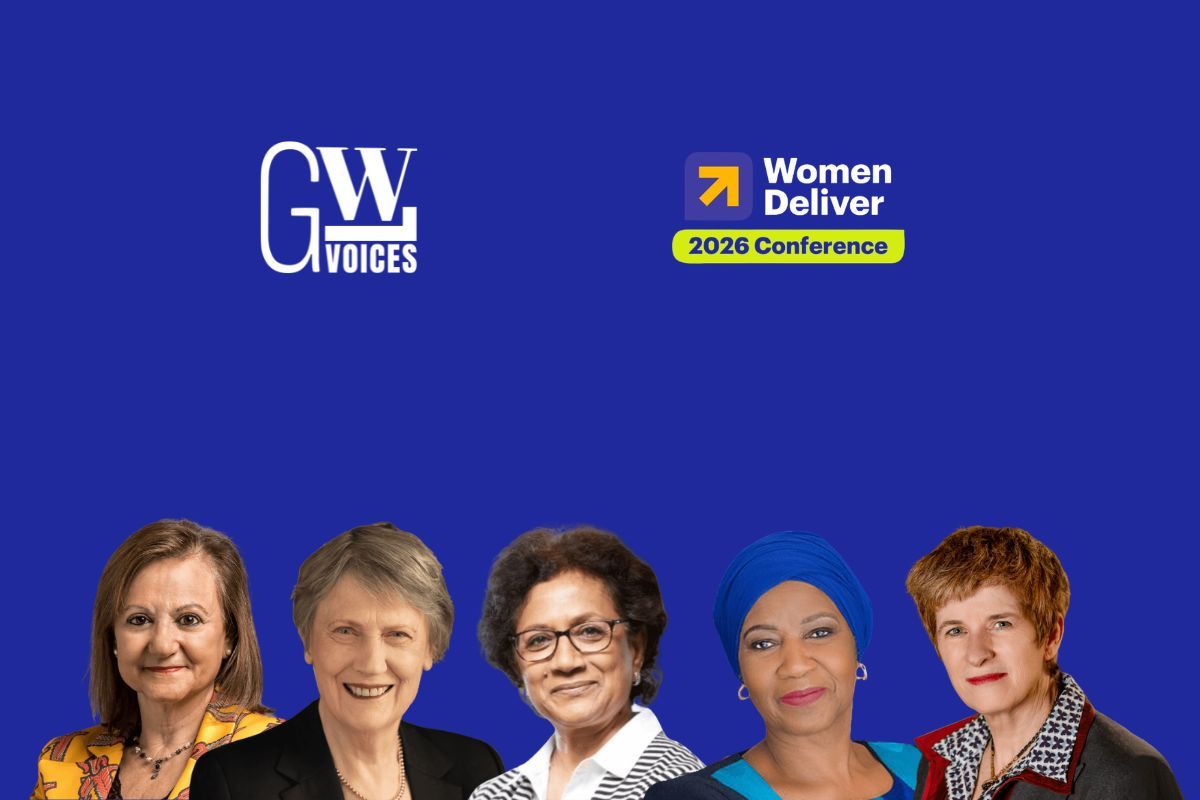
Women’s leadership emerged as a central theme at Women Deliver, strongly reinforced by GWL Voices’ side event “Power, Representation, and the Future of the UN.” Featuring Executive Director (a.i.) Cristina Gallach, co-founder Helen Clark, and member Kate Gilmore, the discussion made clear that the persistent underrepresentation of women in multilateral leadership is not due to a lack of qualified candidates, but rather to entrenched power imbalances and political barriers that continue to exclude them.
Speakers emphasized that who is in the room directly shapes both the legitimacy and effectiveness of global decision-making. The current system, marked by structural inequalities and limited diversity, ultimately weakens multilateralism itself. Moving beyond parity toward genuine equality, redistributing power, and opening space for more diverse women leaders emerged as recurring priorities. Calls for systemic reform of UN structures and processes also featured prominently. Advancing women’s leadership is therefore not only a matter of fairness, but a necessary condition for building a more inclusive, accountable, and future-fit multilateral system.
The plenary session dedicated to “Shaping a New World Order: People-Driven Multilateralism” united speakers, including all GWL Voices members participatingin the panel, around the central role that women views and needs in reshaping the international system. The current system is not neutral. It was built by some, for some. Now it must be reclaimed by everyone. And that means that women must be listened and fully participate in shaping a profoundly renewed multilateralism.
2. Empowering Youth to Shape Multilateral Decision-Making
Another key insight was the need to move beyond viewing young people as passive recipients of decisions and instead recognize them as active shapers of multilateral processes. This was particularly evident during the Her Turn event organized by GWL Voices at the University of Melbourne with Cristina Gallach and Kate Gilmore. Exchanges with students revealed both a critical perspective on the current UN system and a strong appetite for reform. Participants pointed to persistent issues such as lack of accountability, power imbalances, and the need for a more proactive, transparent, and inclusive UN.
At the same time, young people articulated a clear vision for the future, calling for leadership that is more responsive and representative. These conversations showed that youth are not only ready to engage, but are already contributing concrete ideas and expectations. Their meaningful inclusion is therefore essential to building a more legitimate and effective multilateral system.
3. Placing Women at the Center of Climate Action and Justice
A central conclusion from Women Deliver was the recognition that climate change is not gender-neutral, and that advancing climate justice requires placing women’s leadership at the center of solutions. Discussions consistently highlighted that women and girls are disproportionately affected by the climate crisis due to existing inequalities, while also acting as critical agents of change, leading adaptation, resilience, and community-based responses on the frontlines.
The Women Deliver agenda stressed that effective climate action must be gender-responsive, integrating issues such as health, rights, and access to resources, while ensuring women’s full participation in decision-making spaces. Ultimately, the conference reinforced the deep interconnection between climate action and gender equality: without empowering women and amplifying their leadership, efforts to build a sustainable and equitable future will remain incomplete.
Cristina Gallach contributed to this conversation by presenting a teaser on women in global environmental governance, setting the stage for the upcoming GWL Voices climate spotlight to be launched at the London Climate Action Week, at the end of June.
4. Strengthening Women's Sexual and Reproductive Health as a Pillar of Equality
The conference also underscored the central importance of strengthening women’s sexual and reproductive health and rights as a cornerstone of gender equality and effective multilateral action. Conversations featuring Kate Gilmore, Helen Clark, and Geeta Rao Gupta highlighted how reproductive health remains one of the most politically contested yet essential areas of global governance. It continues to be constrained by fragmented accountability, underfunding, and the politicization of data and language within multilateral spaces.
Discussions pointed to the need to move beyond rhetorical commitments and toward structural reforms. This includes strengthening civil society participation, ensuring reliable data and transparency, and establishing enforcement mechanisms that do not rely solely on political goodwill. In this context, the Nordic Council call to action towards November was framed as an opportunity to translate shared concerns into coordinated political momentum.
Overall, exchanges reinforced that without sustained investment in sexual and reproductive health,and a clear commitment to women’s leadership, the multilateral system will continue to fall short of its promises.
5. Rethinking Leadership Models for Peace, Security, and the Next UN Secretary-General
A key insight was the growing consensus that advancing peace and security in today’s fractured global context requires a fundamental shift in leadership models, particularly as attention turns to the selection of the next UN Secretary-General. During the Colmena Fund partnership discussion, with the intervention of member Epsy Campbell and the GWL Voices team, the upcoming debate on the next Secretary-General, scheduled to take place in Geneva on 9 June, was announced as a key moment to further shape this agenda and build momentum for transformative leadership at the UN.
A clear narrative emerged from this exchange: peacebuilding today demands leadership rooted in empathy, consensus-building, and collective responsibility, moving beyond traditional power-centric approaches. Speakers stressed that women’s leadership should not be defined by stereotypes, but by a broader and more effective vision of governance that connects lived experience with political action. In this context, positioning a woman as the next UN Secretary-General was framed not only as a symbolic milestone, but as a necessary step to align global leadership with the urgency of current crises, recognizing that the systems producing today’s challenges cannot be the same ones expected to solve them.