GWL Voices for Water: An Urgent Nexus for Climate Governance
Share
Water sits at the intersection of multiple global challenges, from climate adaptation and food security to public health and economic resilience. GWL Voices approaches these interconnected issues recognizing that inequalities in one domain reinforce vulnerabilities in others. By linking water governance to broader debates on climate leadership and multilateral reform, GWL Voices helps reinforce the narrative that improved governance starts with the full and equal participation of women.
Global governance: An imperative in multilateralism
The global water crisis is accelerating in the context of climate change. Increasing temperatures, shifting rainfall patterns, and unsustainable extraction are pushing the world toward what experts now describe as “water bankruptcy.” Rivers are drying, aquifers are depleting, and ecosystems are under severe stress.
This is not only an environmental crisis, it is an economic and governance crisis. By 2050, water mismanagement combined with climate impacts could shrink GDPs by up to 8% in high-income countries, and by as much as 15% in lower-income countries. Water governance is therefore climate governance, according to the Water Commission. And yet, governance systems continue to overlook one of the most critical resources for resilience: women’s leadership.
Women bring essential knowledge, lived experience, and community-based solutions to water management and climate adaptation. From safeguarding local water sources to leading sustainable practices in agriculture, health, and urban systems, their contributions are indispensable. Still, about 14% of countries lack mechanisms to ensure women’s equal participation in water decision-making, based on UN Women report.
Where Water Flows, Equality Grows
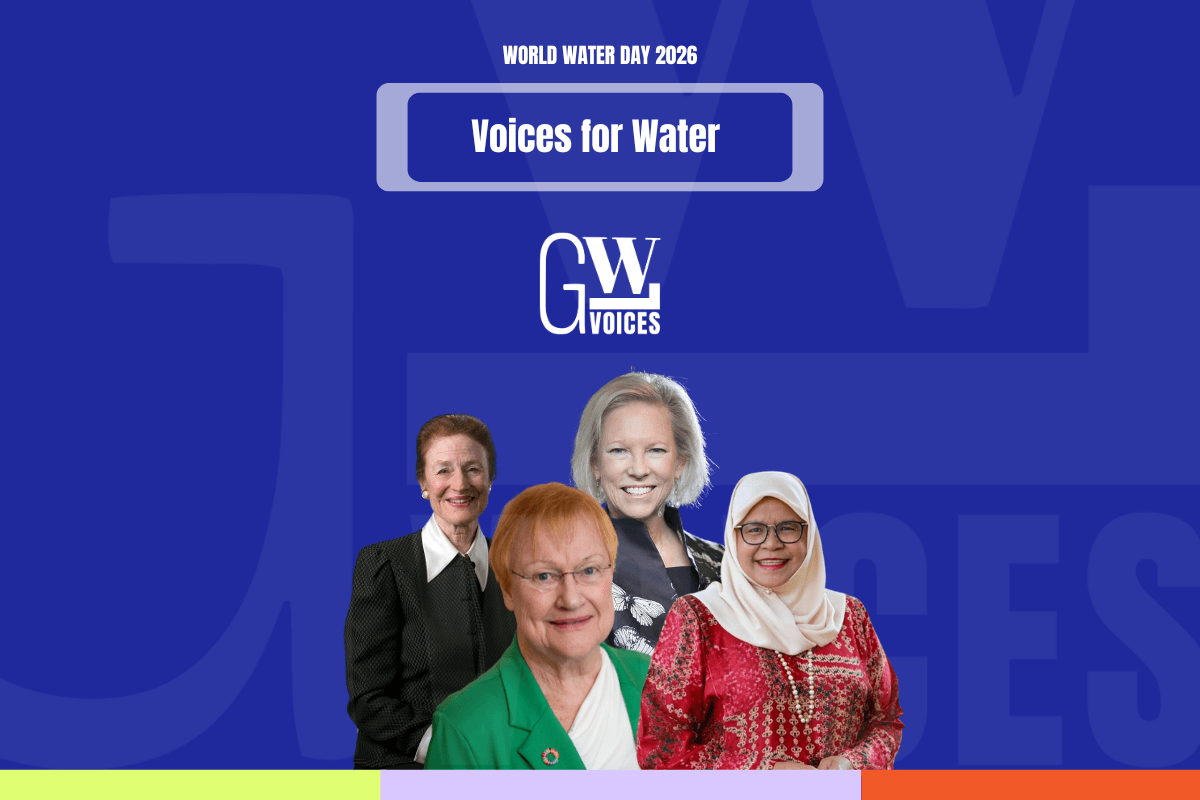
Water is life, but for more than a billion women and girls around the world, access to safe water remains out of reach. On this World Water Day 2026, the global focus on Water and Gender reminds us that the water crisis is not gender-neutral, and neither are its solutions. As GWL Voices has stated previously, there can be no climate action without women at the decision-making tables.
Across the world, women and girls bear a disproportionate burden, particularly when it comes to water management. They are the ones walking long distances to collect water, spending a staggering 250 million hours every day on this task alone, says UN Women, time that could otherwise be dedicated to education, paid work, or leadership. In 70% of households where water must be collected outside the home, this responsibility falls on them, exposing them to risks to their safety, health, and dignity, based on UN Water report.
Yet, despite their central role in managing water resources at the household and community levels, women remain largely excluded from the spaces where decisions are made. Today, only 23% of leadership positions in the water sector are held by women. This gap is not just unjust, it is inefficient and unsustainable. The situation is similar in climate governance, as GWL Voices shared in its teaser on Women in Climate and Environmental Leadership.
Why Women’s Leadership Matters
Ensuring access to water is not only about infrastructure, it is about power, participation, and justice. By advancing women’s leadership in water governance, we unlock solutions that are more equitable, more effective, and more sustainable for all.
This World Water Day, GWL Voices reaffirms a simple truth: Where water flows, equality grows. GWL Voices’ strength lies in its network bringing together experienced global leaders who have worked at the highest levels of government, international organizations, and civil society. Their collective expertise reinforces a critical message: Inclusive leadership is a must.
Women’s leadership in water governance leads to:
- More inclusive and sustainable resource management
- Improved community resilience to climate shocks
- Better health, sanitation, and food security outcomes
- Stronger accountability and equity in policy-making
GWL Voices supports a future where women’s voices are not only heard but shape the decisions that define humanity’s future. The path forward is clear: solving the global water crisis and tackling climate change require inclusive governance systems that recognize and invest in women’s leadership.