My GWL Voices Story by Jing Lin
Share
In 1995, in Beijing, China, the Fourth World Conference on Women marked a historic turning point. Representatives from 189 countries came together to adopt a comprehensive global policy framework for gender equality — a moment later known as Beijing 1995, whose influence would quietly shape generations of women around the world.
I was born the year after, in 1996, and grew up in China as one of those generations. For much of my childhood, Beijing 1995 was not a distant international event, but something woven into everyday life. I remember family members talking about how women were encouraged to enter the labor market, how gender pay gaps in urban sectors were narrowed, and how education was no longer framed as a privilege reserved for boys. My parents raised me with the belief that I could learn, study, and even outperform my male peers. I witnessed women being lifted out of poverty through long-term reforms and social policies. At the time, I did not have the language to name these changes — but I was living their consequences.
This year, through GWL Voices, I encountered Beijing 1995 again — this time through the Beijing +30 review. As I approached my 30 years old, the convergence felt deeply symbolic. Beijing 1995 was no longer an isolated historical milestone; it became a living thread connecting women across generations, geographies, and struggles. Listening to GWL Voices members who had been present in Beijing in 1995 was profoundly moving. They reflected not only on achievements, but also on setbacks, backlash, and unfinished work, with honesty and clarity.
What struck me most was their courage. They named structural problems within democracy, justice, and multilateral systems without hesitation. They spoke about how progress is never linear, and how women’s rights are often the first to be challenged in moments of crisis. Sitting in the auditorium, I understood more deeply why women’s voices are not only important, but essential to shaping society and history.
At that moment, history did not feel distant or abstract. It passed by like a gentle breeze — something I could feel, even if I could not fully grasp it. I realized that I was not only learning about history that day; I was participating in it.
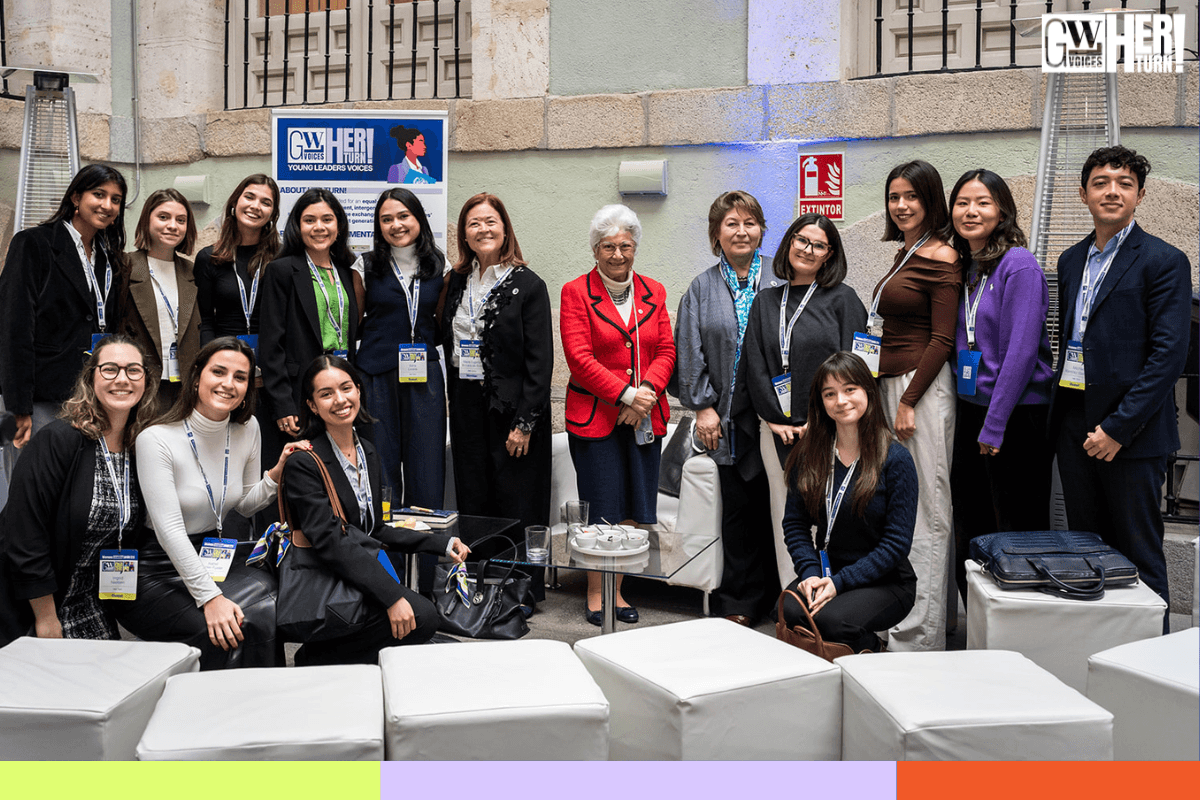
Meeting the members of GWL Voices made this realization tangible. They were not abstract role models, but real women whose generosity and wisdom left a lasting impression on me. Flavia Pansieri spoke to me gently in Chinese and shared how her experiences in China shaped her perspective on development and global justice.
During our fireside chat, Irena Vojackova-Sollorano emphasized that adaptability and resilience are essential qualities of women’s leadership today. I still remember Maria Eugenia’s sincere care when she told me never to forget my own country, and to return one day to serve the people who need it most. I also carry with me the encouragement and thoughtful messages shared by many other members.
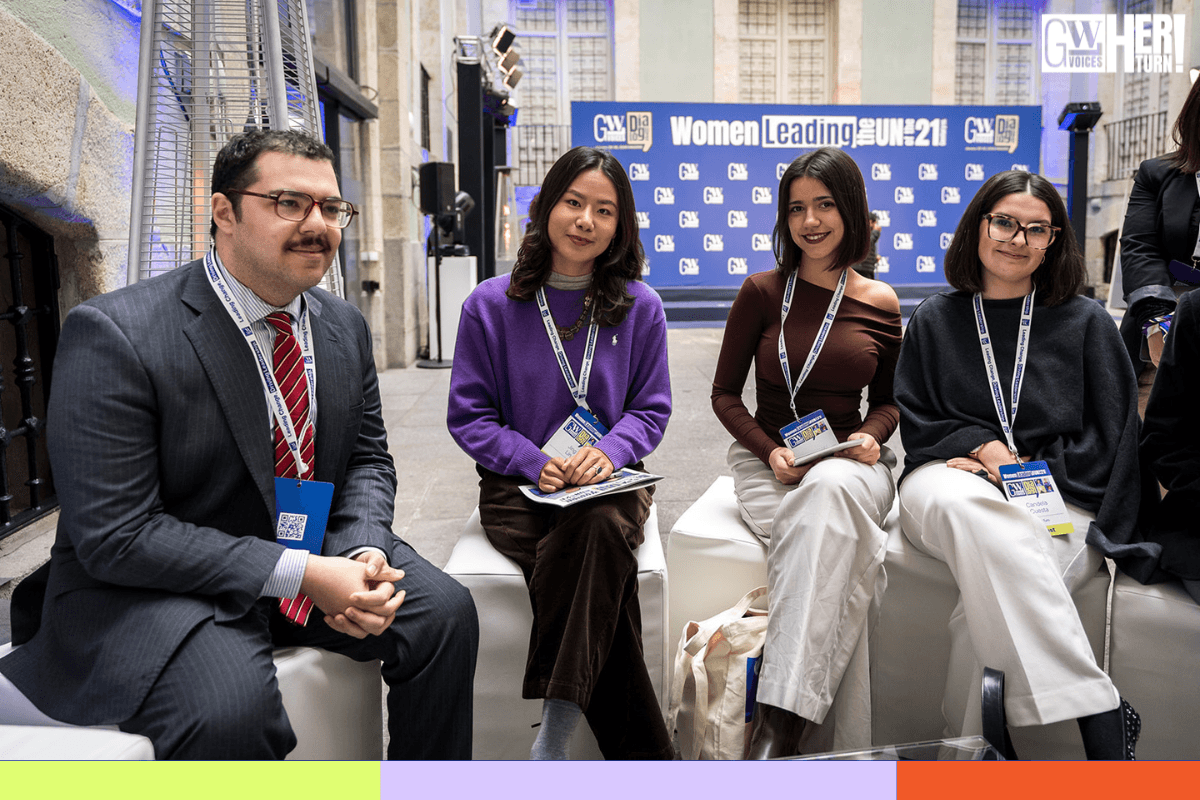
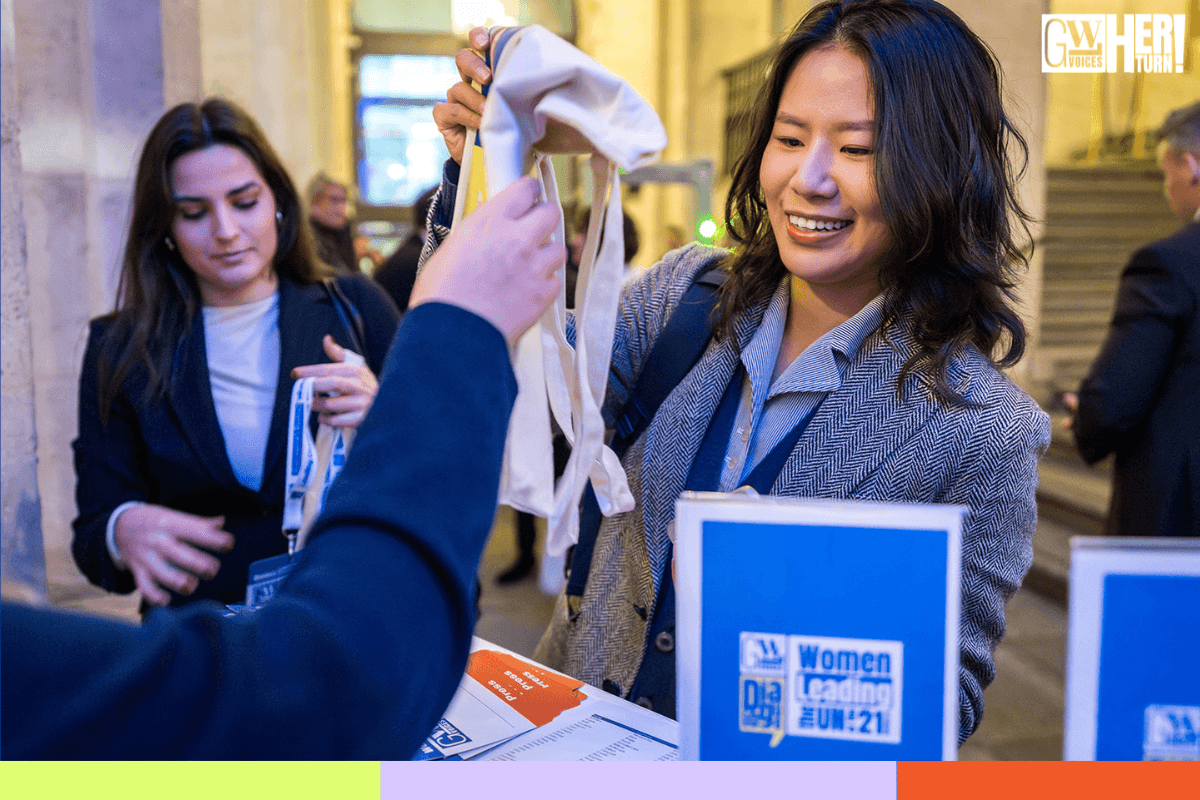
Being part of the Her Turn initiative and serving as a Her Turn Rapporteur has been both an honor and a responsibility. It offered me a space to learn, to be nurtured, and to imagine myself not only as a witness to women’s leadership, but as a future participant in it. This experience reaffirmed my belief that this moment — for women, and for me — is not just meaningful. It is historical.