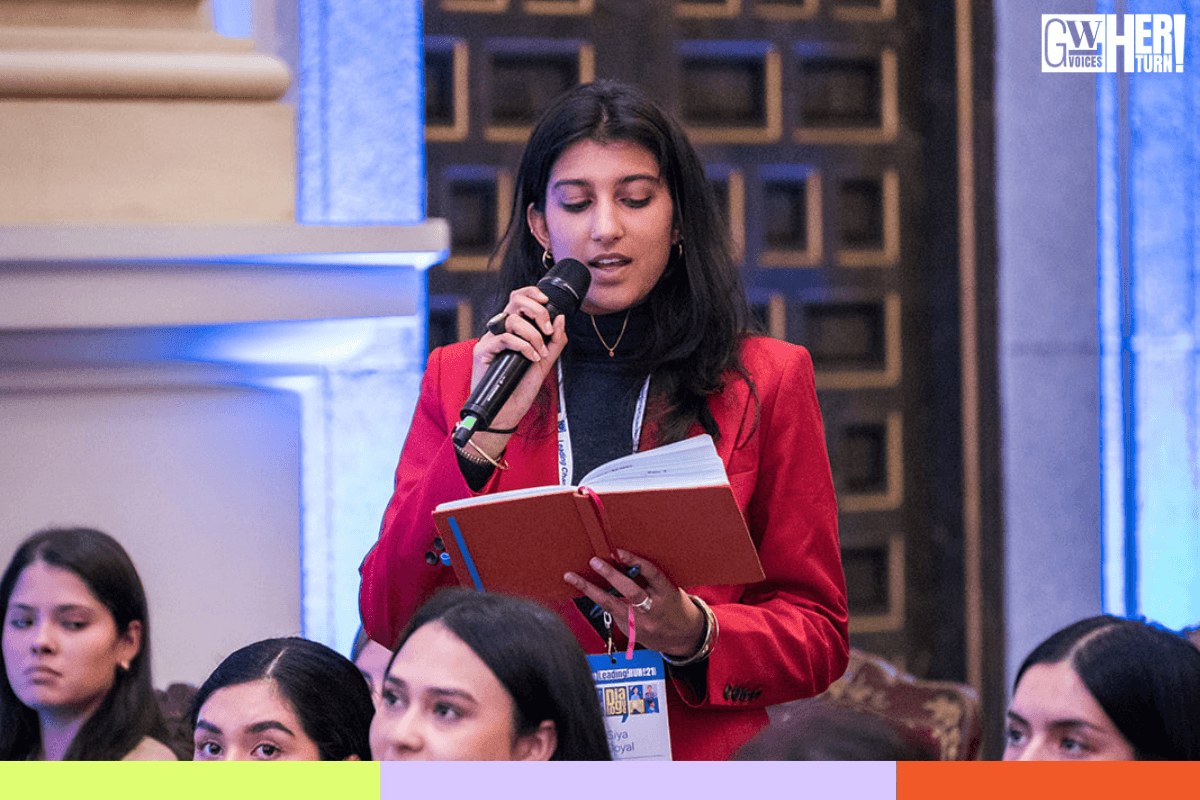
My GWL Voices Story by Siya Goyal
Share
How do you hold on to hope and make a difference in a world where the systems meant to deliver justice feel increasingly broken? This is a question that has shaped my thinking throughout my studies in International Development and what pushed me to apply to join GWL Voices’ Dialogue as a HerTurn Young Rapporteur in Madrid. During the Dialogue, I remember a moment of being struck by one of the panellist’s descriptions of seeing photos of the 1995 Beijing as a young girl. This was an unforgettable experience for her, when she saw a cross-society alliance enact real change for women worldwide. I realised that in our generation, at least in my living memory, we have not really had this. Discussions in class or around a lunch table often revolve around the hypocrisy and double standards that pervade the UN System where leaders are often unable to provide clear or real answers. My peers and I have lost belief in justice- whether it be gender justice, human rights, and climate justice- and have grown angry and disillusioned. It was in this mindset that I attended the conference in Madrid: could this experience offer guidance on how to pursue change amid polycrisis?
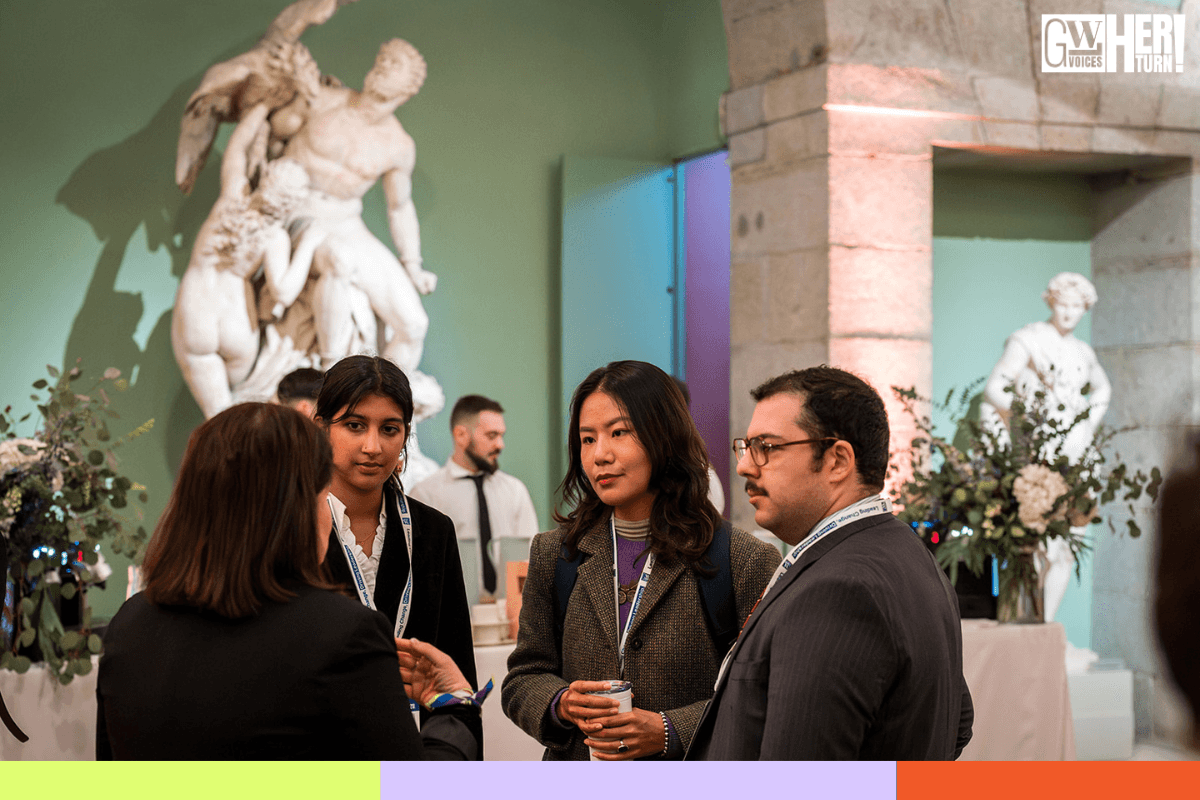
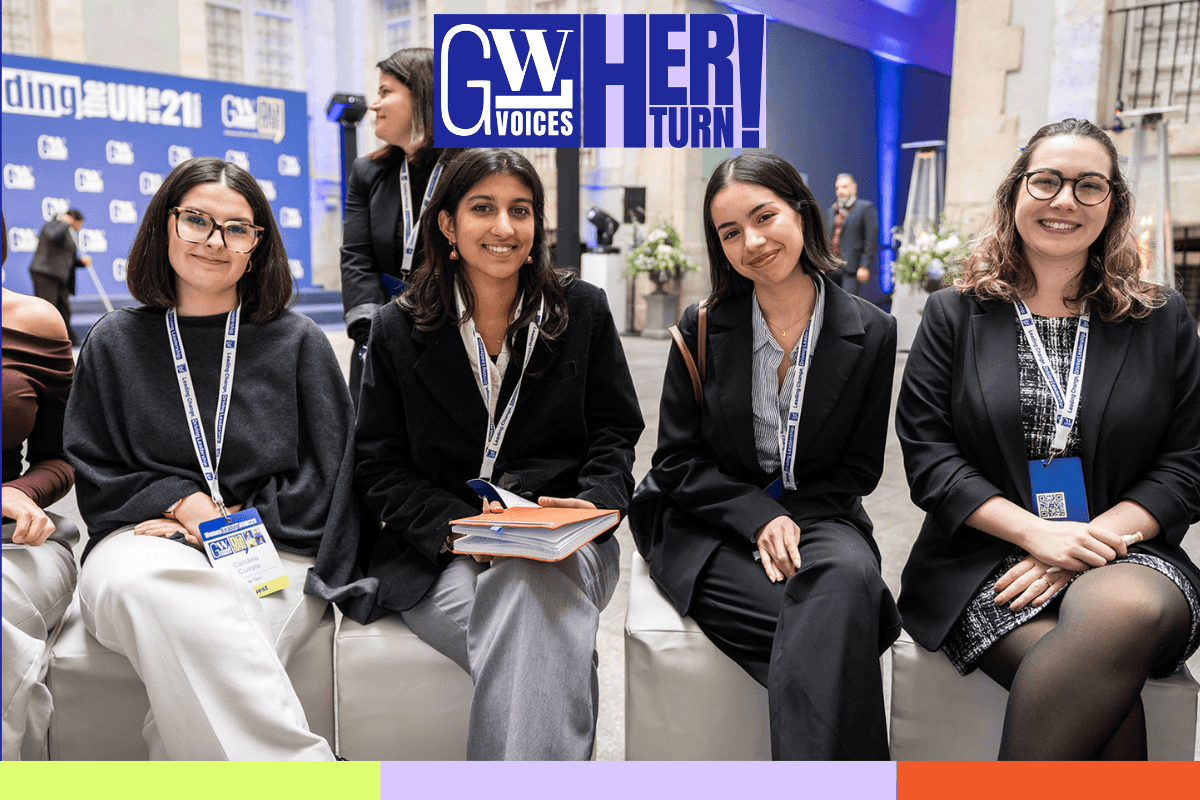
What I found at the Dialogue were many nuggets of hope and encouragement. Three things struck me particularly. Most important of all, that woman leadership is not just a ‘nice to have,’ but a necessity. Across the two-day event at the beautiful Real Academia de Bellas Artes de San Fernando, the most impressive and highly decorated women of the multilateral system had gathered, but there was little sense of pretentiousness or self-importance. It was a palpable atmosphere of solidarity, friendship, and womanhood in all its forms – empathy, firmness, dynamism, and analytical depth. I found this environment deeply affirming. It is precisely in these spaces that productive conversations and dynamic decisions are forged, between men and women alike. Here, dialogue and directness prevail over the strong-man rhetoric and empty jargon that all too often pervade multilateral forums. Secondly, I have come to appreciate the importance of communication and impact. Many of the panellists stressed that the crux of the issue is one of trust, of over managerialism and under delivery. This has changed my mindset towards approaching future work in the development space where I will aim to look beyond technocratic frameworks and relate my work to pragmatic goals with emphasis on impact.
Finally, I learnt to have hope: there were multiple references to a paradigm shift or change, but one that can be capitalised upon and that can present us with new ways of radically changing the system. The example of the Spanish government's commitment to justice throughout the leaderships’ speeches really resonated with this, showing to me how governments can shift towards diplomacy and prosperity without forsaking ethics and rights-based justice.
Overall, I learned an enormous amount, and while many questions remain unanswered and much work still lies ahead, the GWL Voices’ Dialogue offered something invaluable: clarity about the kind of leadership I hope to practise. As I move forward, I can only aspire to carry conversations and lead in this same spirit, grounded in humility and directness, with the example set by the women whom I had the honour of meeting and listening to in Madrid.