My GWL Voices Story: Patricia Remy Mardones
Share
GWL Voices’ insights and reflections often resonate with new generations. Inspired by leaders like María Fernanda Espinosa and Michelle Bachelet, and driven by her commitment to women’s rights, Patricia Remy Mardones, a Franco-Chilean student at La Sorbonne University, represents a new generation of women voices determined to reshape international law and ensure that women’s participation in peace and decision-making is no longer the exception—but the norm. This is her GWL Voices Story.
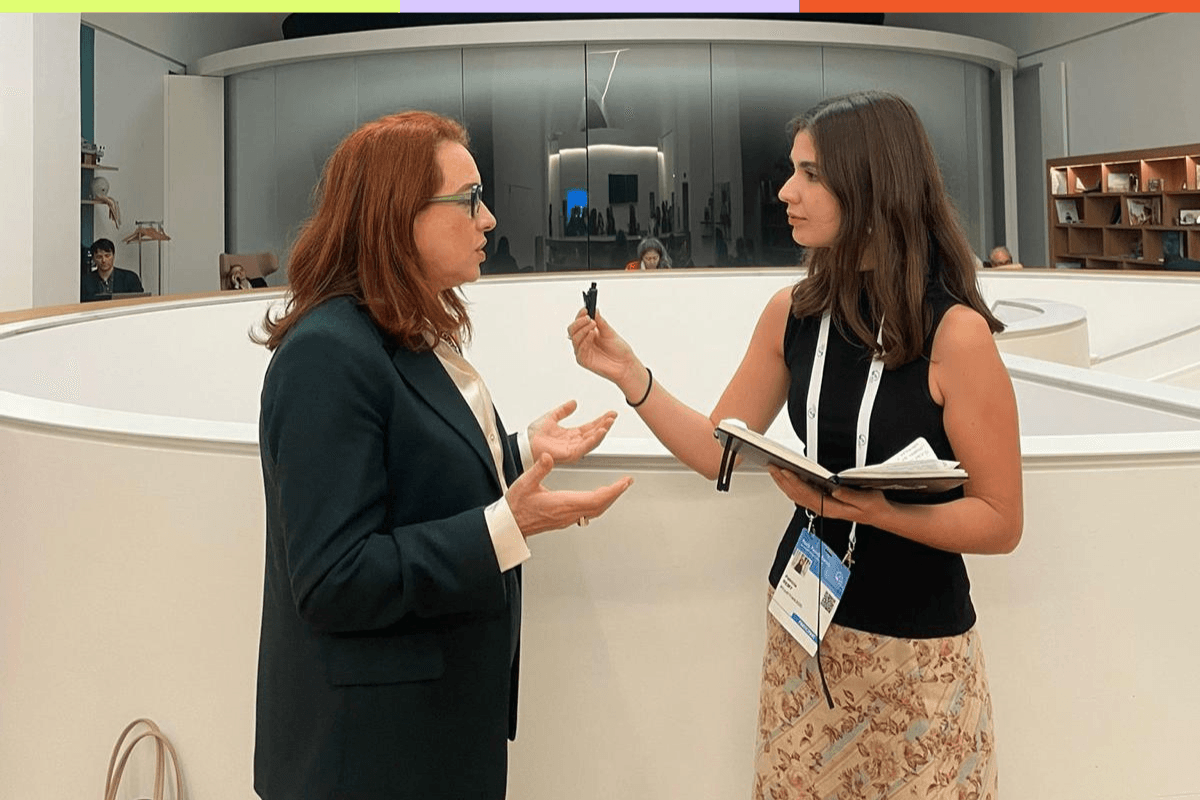
“Not only do we deserve to be there, but when we are, we do it well.” Those were the words of María Fernanda Espinosa, GWL Voices Executive Director, when I had the opportunity to speak with her during the Paris Peace Forum, referring to the urgent need for more women in leadership positions within the international system.
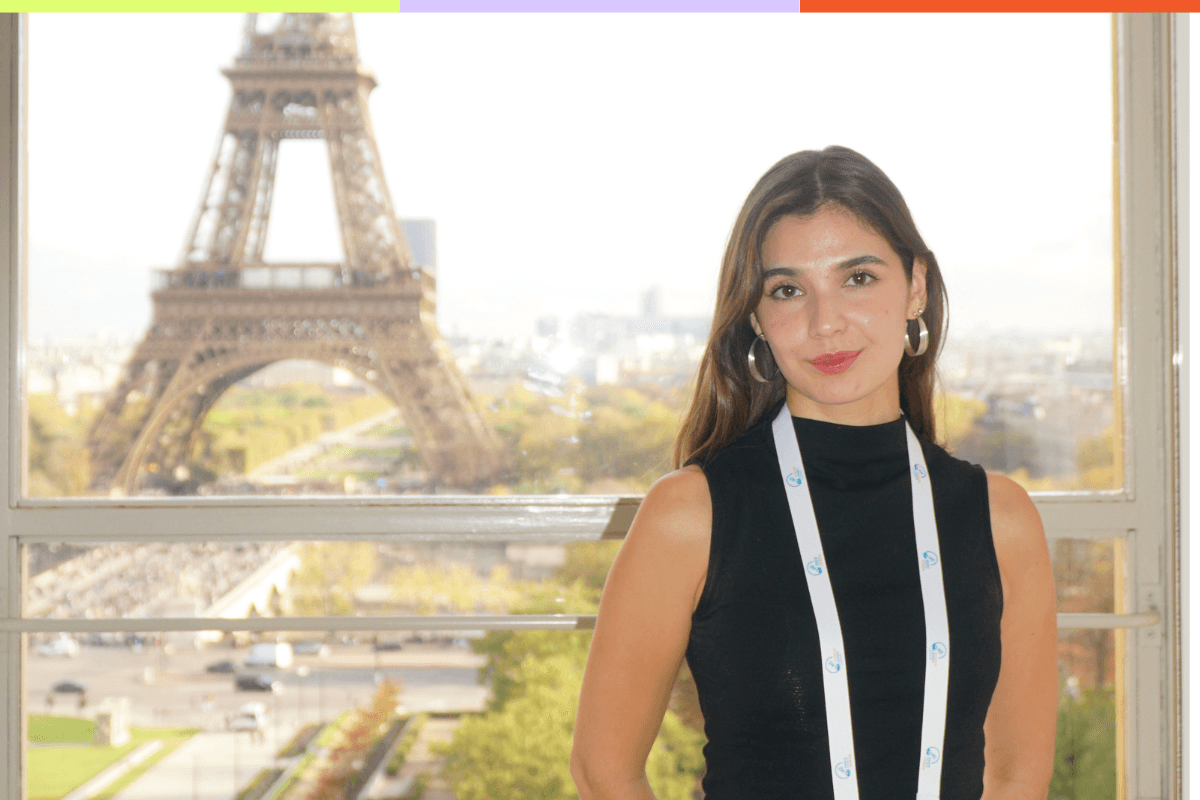
My name is Patricia Remy Mardones, and I am a Franco-Chilean student doing a Master’s degree in International Law and International Organizations at La Sorbonne University (Paris 1 Panthéon-Sorbonne) in Paris. Growing up in Chile, I’ve always felt inspired by Michelle Bachelet, Member of GWL Voices, Chile’s first woman president, and former UN High Commissioner for Human Rights, to be ambitious, to take control of situations and to always go forward. My commitment to women’s rights in the international system began at a very young age, but it became tangible through my university engagement: I joined Sorbonne for the United Nations association, within the UN Women branch, with the aim of advocating for and raising awareness about women’s situations around the world. Today, as president of the association, I continue to contribute as much as I can to shed light on the challenges women face globally.
At the same time, I am doing my master’s research, connecting my feminist activism with my academic background in international law. My thesis, entitled “The Underrepresentation of Women in Peace and Reparation Processes in International Law”, aims to demonstrate that women are key agents of change. Women are capable and must be included in peace and reparation processes, and, more broadly, in all areas of international law. As a student and as the head of a student association, I give my utmost to defend this conviction.
I have had the privilege of listening to María Fernanda Espinosa, former Minister of Defence and Foreign Affairs of Ecuador, and President of the 73rd Session of the United Nations General Assembly, on multiple occasions: first, during the seventh edition of the Paris Peace Forum, where her reflections on women in leadership deeply inspired me; and later, at the eighth edition, where, besides attending multiple conferences and round tables, I had the privilege to interview her about the importance of women’s presence in leadership roles. As a 22-year-old Chilean woman, hearing such a determined and brilliant Ecuadorian woman speak on this topic was an incredibly empowering experience.
Her trajectory is a powerful inspiration for women worldwide, proving that women can achieve and succeed in international leadership roles. Through her work with GWL Voices, she emphasizes the importance of encouraging intergenerational dialogue and sharing the experiences of women leaders to create more opportunities for other women, especially younger generations.
In our conversation, we discussed how women generally face more obstacles than men in these positions. We constantly feel the need to prove that we belong there, to deliver better results, to showcase our abilities… all while being closely observed in a male-dominated environment. We must confront impostor syndrome and continue to fight, because rights are never permanently secured. We must keep opening doors for other women, so that a woman leader becomes not the exception, but the norm.
Progress is not always linear, and setbacks can occur. Yet, my discussion with María Fernanda Espinosa gave me hope: even in the face of challenges, we must remain vigilant and persistent. Because we, women, deliver results; we manage crises; we solve problems. Because we represent half of the world’s population, and because “not only do we deserve to be there, but when we are, we do it well.”