Next UNSG Data: A New Tool for Tracking Who Says What in the Race for the World's Top Job
Share
Inequalities in global governance look the same in every language, and now, for the first time, we have the data to prove it.
The selection of the next UN Secretary-General is a test of whether the multilateral system can live up to its own commitments. While much of this process unfolds behind closed doors, civil society-led public engagements have helped increase transparency and provide spaces for UN Secretary-General candidates to share their vision and priorities for "We the Peoples."
To analyze those priorities, and how candidates propose to address them, GWL Voices has built a tool that examines candidates' words across three key public engagements.
As UNGA President Annalena Baerbock noted when the selection and appointment process began:
Our choice of who leads the United Nations sends a clear message about who we are and what the organization stands for."
The Next UNSG data platform is part of GWL Voices' mission to strengthen multilateralism and demonstrates how civil society can ensure that this message is grounded in evidence, not just aspiration.
What the Platform Does
The Next UNSG data platform is a publicly accessible, interactive data tool that maps the language and participation patterns of the 2026 candidates for UN Secretary-General across three key public engagements: the Geneva Debate hosted by GWL Voices and the United Nations Foundation; the UNA-UK Hustings; and "Reimagining Multilateralism: A Dialogue with UN Secretary-General Candidates," hosted by the Jeju Forum for Peace and Prosperity, the Ban Ki-moon Foundation, the United Nations Foundation, and GWL Voices.
The dashboard has two key functions:
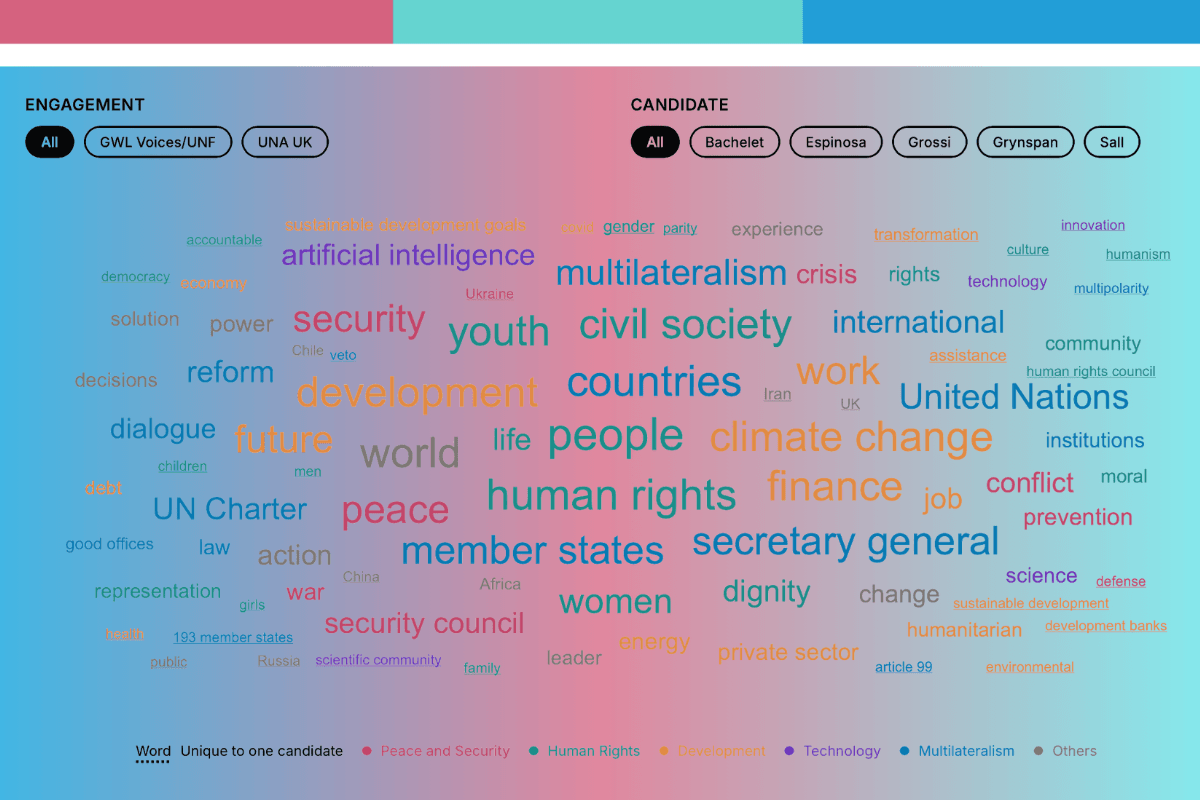
1. Compare candidates' thematic priorities through their own words. By visualizing which terms each candidate used—and which words were unique to a single candidate—the tool reveals where their visions converge and where they diverge. Thematic clusters span peace and security, human rights, development, technology, and multilateralism. The platform makes visible what is emphasized, what is avoided, and what is left unsaid.
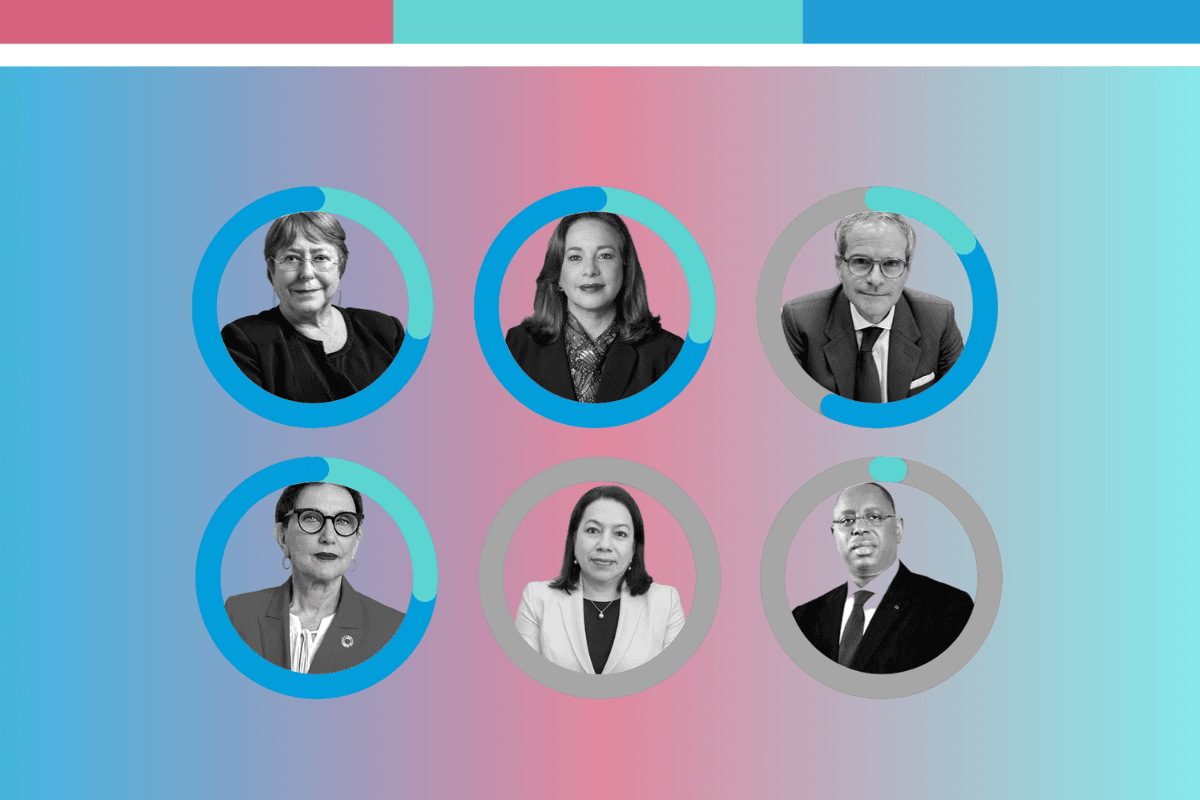
2. Measure participation itself. The platform tracks speaking time, listening time, and presence across sessions, providing insight not only into what candidates say, but also how they engage.
How to Use It
The platform is available at gwlvoices.org/projects/nextunsgdata. Visitors can:
- Filter by engagement (all sessions, GWL Voices/UNF, UNA-UK, or Jeju) and by candidate.
- Explore thematic word maps showing what each candidate emphasized and what set them apart.
- Review participation data showing speaking time, listening time, and attendance across sessions.
GWL Voices invites journalists, researchers, member state delegations, and civil society advocates to explore the data and use it to inform the conversations ahead.
The selection process is accelerating. The evidence is here.