Women are mentioned. But are they recognized as leaders?
Share
GWL Voices analyzed 197 statements delivered during the 81st session of the United Nations General Assembly to explore a fundamental question: When world leaders speak at the UN, how often do they explicitly recognize women's leadership?
The findings reveal a gap between the language of gender equality and the explicit recognition of women as leaders.
What did 197 statements reveal about women's leadership?
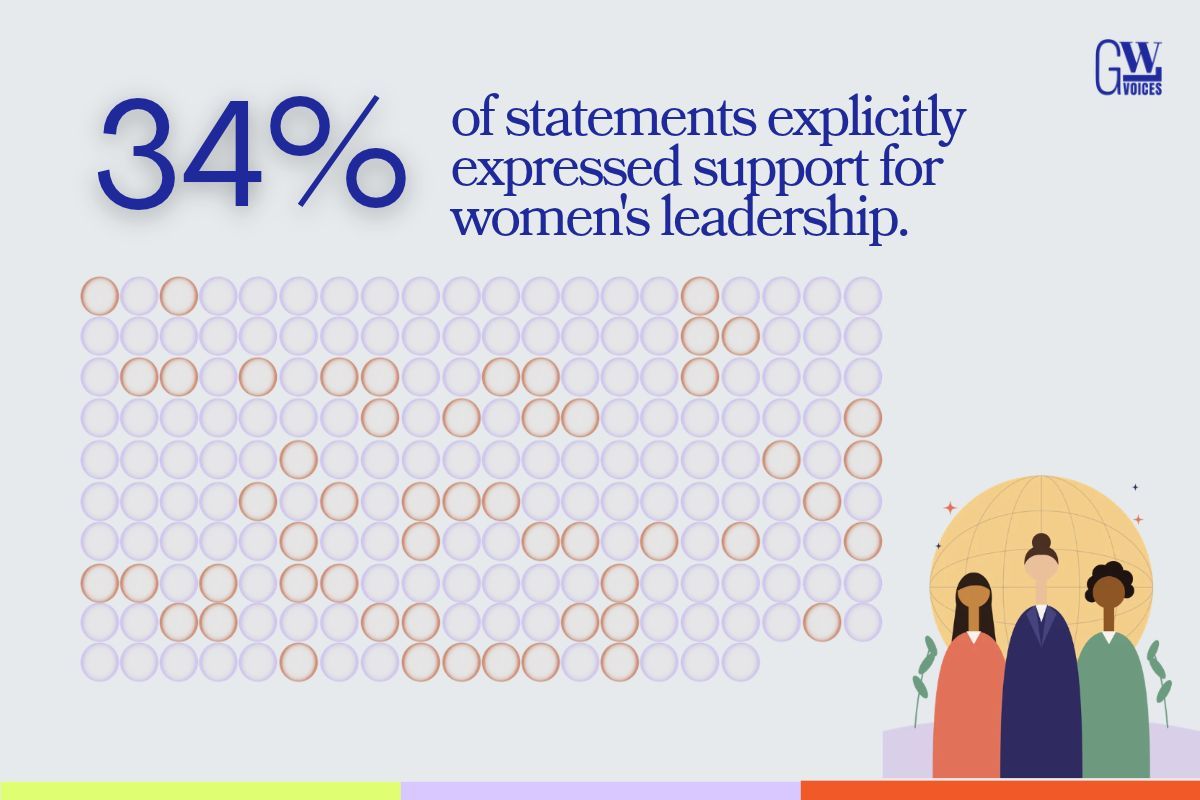
- 34% of statements explicitly expressed support for women's leadership.
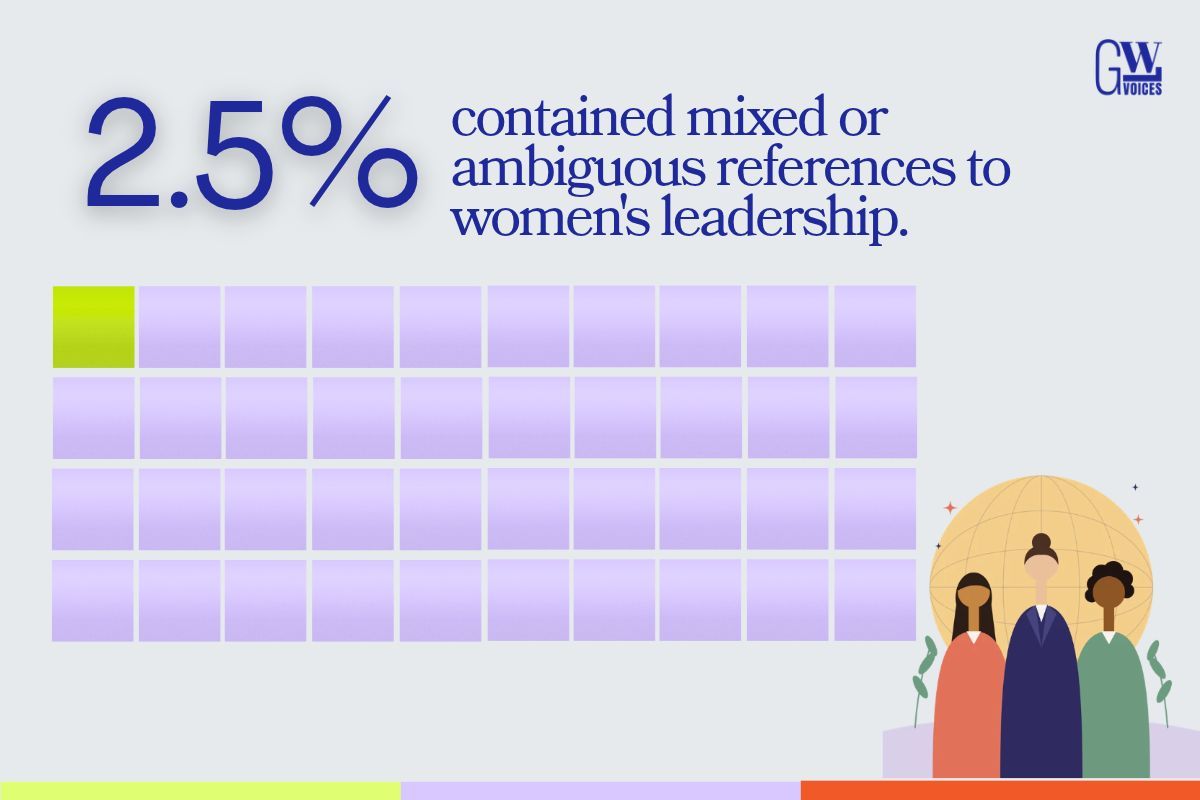
- 2.5% contained mixed or ambiguous references to women's leadership.
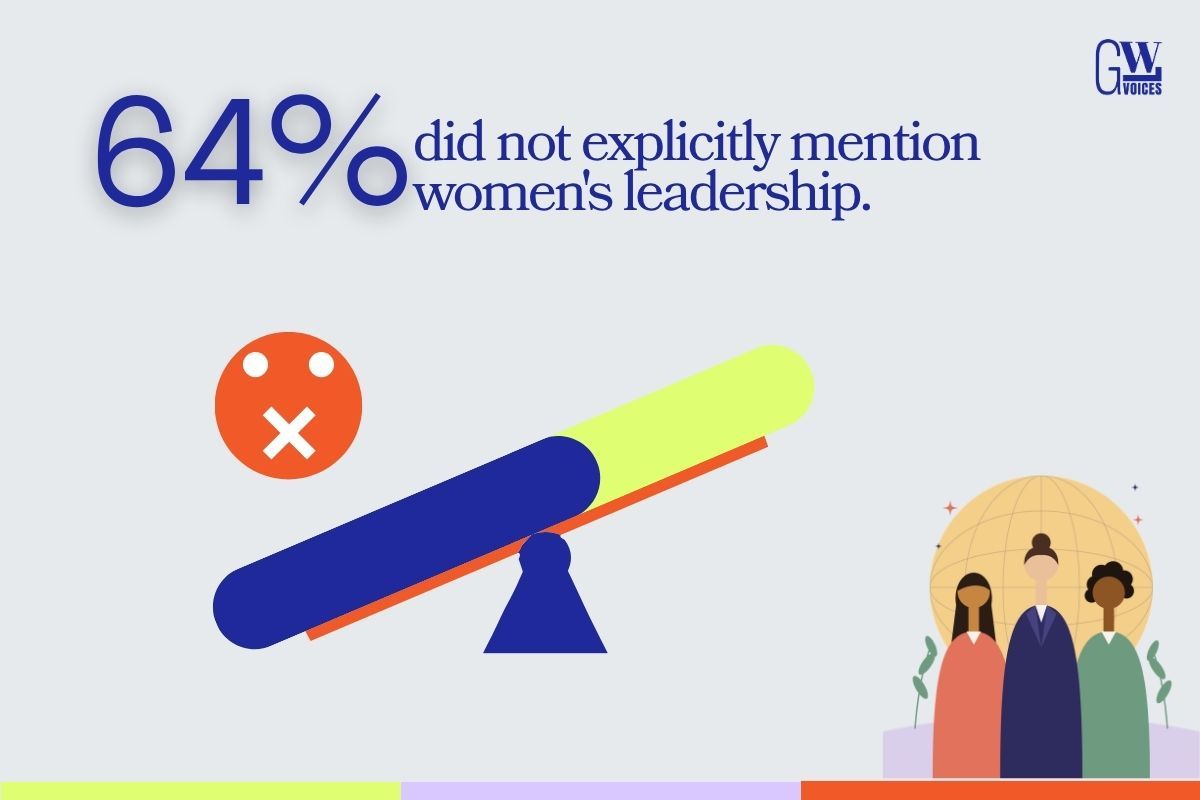
- 64% did not explicitly mention women's leadership.
These figures reflect references in the statements analyzed, not governments' overall records on gender equality or women's representation.
The findings raise an important question: Can gender equality be a global commitment without women's leadership being a political priority?
The words we use shape the power we imagine
The language of diplomacy matters. The words world leaders choose help articulate who should participate in decision-making, where leadership is needed, and whose voices should shape our common future.
Some statements at UNGA81 explicitly connected women's leadership with peacebuilding, political participation, economic opportunity and accountable governance.
Women at the negotiating table
“Women must have a real voice at the negotiating table, as leaders and peacebuilders, not as an afterthought.” H.E. Beate Meinl-Reisinger. Federal Minister for European and International Affairs of Austria
This statement positions women not simply as people affected by conflict, but as leaders with a role in shaping peace.
Leadership as a matter of fairness and justice
“This fairness and justice should extend to the participation of women in decision making, including in the prevention and resolution of conflicts, post-conflict reconstruction and peace building, in line with UN Security Council Resolution 1325 on Women, Peace and Security.” H.E. Netumbo Nandi-Ndaitwah. President of Namibia
Here, women's participation in decision-making is framed as a matter of fairness and justice, extending across conflict prevention, resolution and peacebuilding.
From equality to meaningful participation
“The Gambia remains committed to expanding women's economic opportunities, strengthening women's leadership and addressing the barriers that limit their meaningful participation in political and public life.” H.E. Mohammed Jallow. Vice President of The Gambia
This statement links women's leadership to the removal of structural barriers and to participation in both economic and political life.
Representation must mean having a voice
“And representation must also mean that women have a meaningful voice in the decisions that shape our common future. They are already at the forefront of this organisation's work, from development to peacekeeping.” H.E. Anutin Charnvirakul. Prime Minister of Thailand
The statement draws an important distinction between representation and meaningful influence over decisions.
Equality as a foundation for better governance
“Gender equality remains essential when women lead, peace agreements last longer, economies grow faster and governance becomes more accountable.” H.E. Joseph Nyuma Boakai. President of Liberia
This framing connects women's leadership to peace, economic outcomes and institutional accountability.
Women's leadership in public life
“Tunisia emphasizes its commitment to strengthening the role of women in public life and in decision making positions, and to continuing efforts to combat all forms of violence and discrimination against women.” H.E. Mohamed Ali Nafti. Minister of Foreign Affairs, Migration and Tunisians Abroad of Tunisia
This statement places women's access to decision-making positions alongside the need to address violence and discrimination.
Beyond the words: what does leadership require?
These examples demonstrate different ways governments articulate support for women's leadership: as a matter of justice, a condition for peace, a driver of development, or a requirement for meaningful political representation.
But statements of support are only one part of the picture. The next question is how these commitments translate into political choices, institutional representation and access to decision-making.
The findings also invite us to reflect on what remains absent from public discourse, without assuming that silence alone signals opposition.
What would change if women's leadership were a political priority?
For GWL Voices, advancing women's leadership means going beyond recognition in principle to meaningful participation and influence in the institutions that shape our shared future.
We invite GWL Voices members, emerging leaders and young people to reflect on women’s leadership
We the need to have meaningful women’s participation and leadership, not just for women’s human rights consideration, but in order to build a solid economic, social, and political foundations for a just and fair societies everywhere. Noeleen Heyzer, GWL Voices member
To ensure the effectiveness and sustainability of peacebuilding efforts, women must be provided with seats and decision-making powers at the peace negotiation tables. This will not only signal inclusion but will enhance the quality and durability of peace. Amat Alsoswa, GWL Voices member
I think one of our most important roles is to provide positive role models for women’s involvement at all levels of decision making. My experience as one of three female Special Representatives of the Secretary-General leading peacekeeping missions is that the presence of a woman in high-level discussions can make a difference. Ameerah Haq, GWL Voices member
Gender representation in essential for the functioning of the multilateral systems. International organizations must serve the gender composition of the societies they serve. Manaf Jbari, Her Turn Rapporteur
Women are still very underrepresented. Women have the power and the skills, and have always had them. It is a matter of changing the system. Andrea Sánchez, Her Turn Rapporteur
The conversation continues. GWL Voices will continue to explore how leadership is represented, whose voices are heard, and what it takes to build a more inclusive and representative multilateral system.