Women Leading from the Ground Up: Key insights from Women in Politics at GWL Voices Dialogue 2026
Share
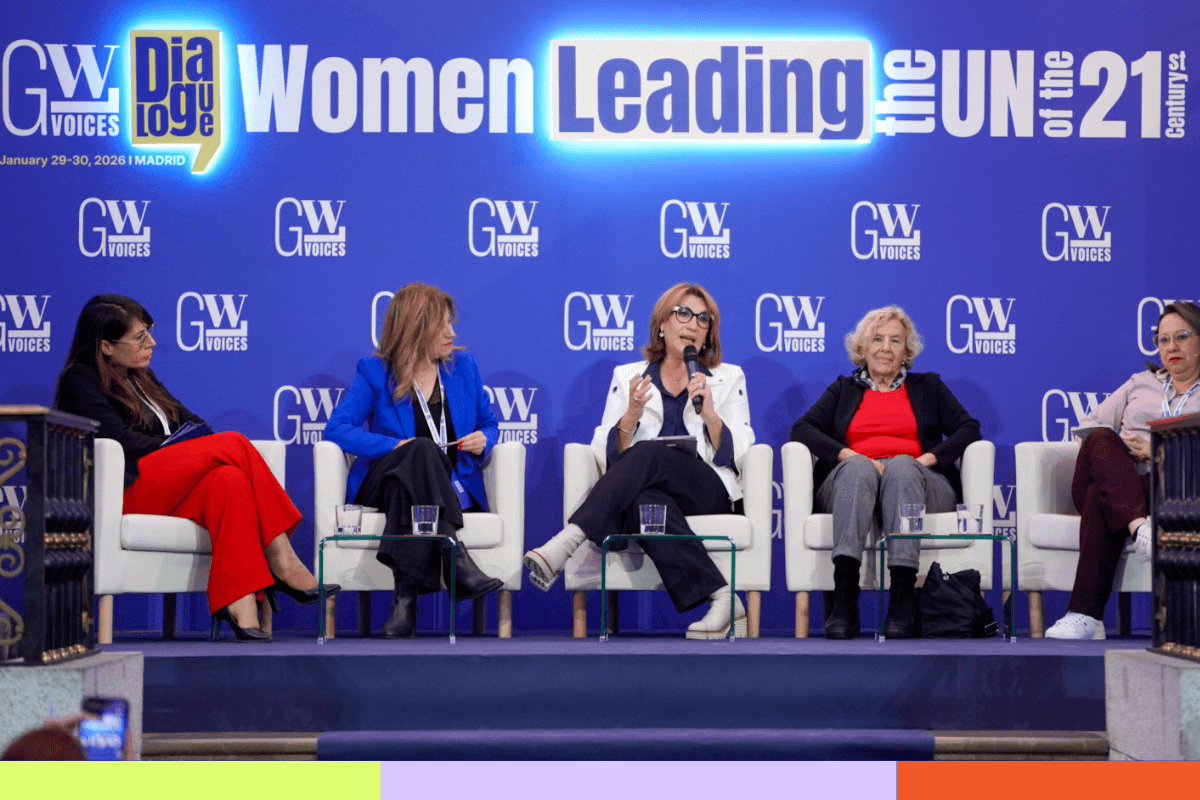
As part of GWL Voices Dialogue 2026, the initiative Women in Politics placed a critical and often overlooked reality at the center of the discussion: democracy can only be sustained if it is built from the local level—and if women are leading that process. Under the title Women Leading from the Ground Up: Turning Global Agendas into Local Action, the dialogue examined how women’s political leadership at local and subnational levels is essential to translating global commitments into tangible change in people’s daily lives. These are the key insights from that conversation:
1. Women in Politics: An imperative for democratic legitimacy
From the outset, participants emphasized that advancing women’s political leadership locally is not merely a matter of representation. It is a strategic imperative for democratic legitimacy and resilience. Local governments are the first point of contact between citizens and the state; they are where rights are realized or denied, services are delivered, and democracy becomes a lived experience. It is also at this level that global commitments are translated into tangible change, and where multilateralism is tested in its ability to remain relevant, effective, and credible..
2. Care: A political principle
A recurring theme throughout the discussion was the recognition of care as a political principle. Care was framed not as a biological attribute, but as a social and cultural practice frequently embedded in women’s political leadership. Caring was understood as responsibility toward people, institutions, territories, and democracy itself. From this perspective, safeguarding democratic systems requires a renewed commitment to care as a collective political value, including a reimagining of international law—not merely as a framework governing relations between states, but as a system designed to serve and protect people.
3. Gender-based Political violence: A systemic barrier for women
The panel highlighted the persistent and alarming underrepresentation of women in executive local offices worldwide. Despite decades of international commitments, women continue to occupy a small fraction of mayoralties and subnational leadership roles, with stagnation or regression in many contexts. In many countries, this reality is driven by entrenched structural barriers, including gender-based political violence, unequal access to resources, the absence of effective legal protections, and deeply rooted gender norms that continue to question women’s legitimacy as political leaders.
Violence against women in politics emerged as a central concern. It was described as systematic and disciplinary rather than incidental—aimed at deterring women from entering, remaining in, or exercising power. This violence manifests in multiple forms, from personal attacks and media bias to uncontrolled digital harassment that affects not only women leaders but also their families and communities. The impact is particularly severe for young women, rural women, and women from indigenous and afro-descendant communities, who face intersecting forms of discrimination that heighten their risk.
4. Local governments at the center of global policies
The discussion also explored how international frameworks such as the Beijing Platform for Action, CEDAW, and the 2030 Agenda can—and must—become more effective tools for women governing at the local and subnational levels. Participants stressed that multilateralism must be reoriented to place local realities at its core. Without this shift, global norms risk becoming disconnected from the lived experiences they are meant to address. At the same time, the absence of local women leaders from global decision-making spaces weakens international agendas themselves. The dialogue underscored the urgent need for data and evidence that make visible existing gaps while also documenting the proven positive impact of women’s full and effective participation in local governance—from participatory budgeting to territorial planning and inclusive service delivery.
From a feminist municipalist perspective, the panel reaffirmed that local governments do far more than implement global agendas: they actively reshape them. Territories are where global decisions intersect with daily life, whether in relation to climate change, social cohesion, or access to care. Far from representing a total failure, multilateralism remains alive in local action. Its future depends on proximity to communities, feminist principles, and equality as foundational pillars of sustainable governance.
Contributions from the audience further reinforced these insights. Women mayors from Honduras, Colombia and Panama shared reflections on generational barriers, gender-based political violence, and the isolation many women experience when they are the only female authority in their territories. At the same time, these interventions highlighted the empowering effect of collective spaces such as the GWL Voices Dialogue 2026, where shared experiences, solidarity, and international connections strengthen women’s capacity to lead and to remain in public office despite persistent challenges.
The panel concluded with a clear message: building truly inclusive democracies requires women not only to be present, but to lead—particularly at the local and subnational levels, where politics becomes tangible and where democratic trust is either built or eroded. Strengthening women’s leadership from the ground up, connecting it meaningfully to global frameworks, and placing it at the center of public agendas is not a symbolic aspiration. It is a strategic choice for the future of democracy and for a multilateral system that is effective, credible, and grounded in people’s realities.