Women's leadership in multilateralism: Is it on the agenda?
Share
GWL Voices analyzed statements delivered during the 81st session of the United Nations General Assembly (UNGA81) to explore a specific question: When world leaders speak at the UN, how often do they refer to women's leadership within the multilateral system itself?
What did the statements reveal?
Gender equality is a recurring reference in Member States’ statements before the UN General Assembly. GWL Voices’ analysis looked at a narrower question: how many statements address women’s leadership in the multilateral system, or the lack of it.
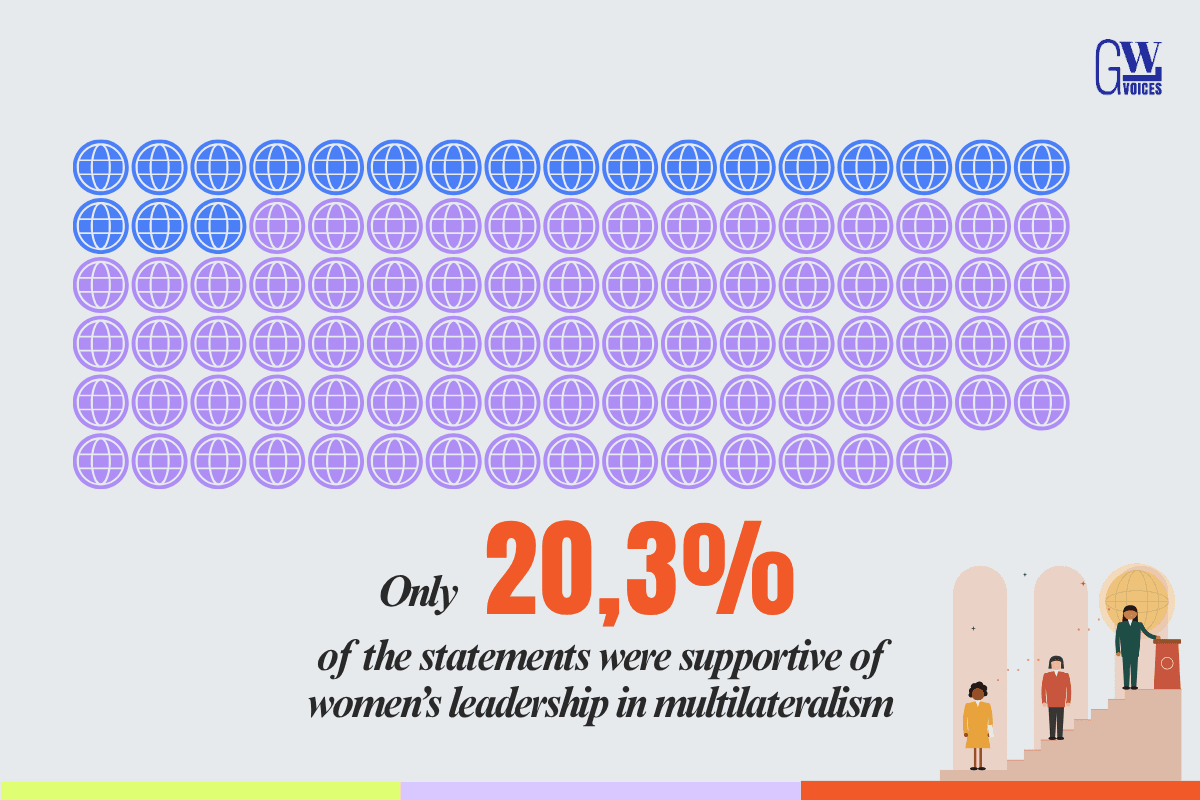
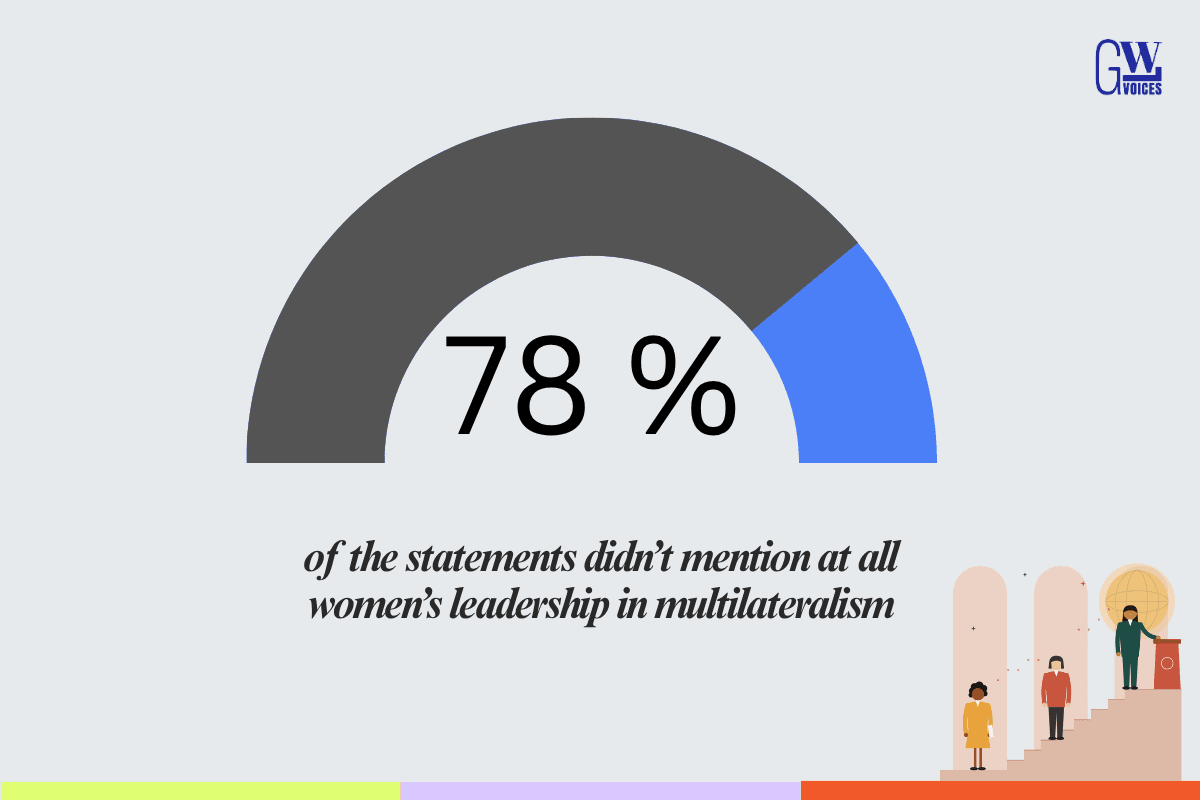
Of the 197 statements analyzed, 20.3% expressed a positive or supportive position on women’s leadership in multilateralism, while 77.6% did not mention it at all.
The same pattern is visible in who took the floor. Of the 196 speakers who addressed the General Debate, 28 were women, representing 14.3%.
These figures reflect references in the statements analyzed, not governments' overall records on gender equality or women's representation in multilateral institutions. However, they raise an important question: Can the multilateral system become more representative if women's leadership within it is rarely part of the conversation?
Who leads the multilateral system?
The statements are only one part of a broader picture. Through its Women in Multilateralism 2026 data, GWL Voices monitored 62 organizations to see who holds power at the heart of the multilateral system.
Of these organizations, 21 have never been led by a woman, 20 have elected a woman to the top position only once, and 21 have elected a woman more than once.
In their own words
Some statements at UNGA81 explicitly connected women's leadership with the multilateral system, from the UN's highest office to peace negotiations.
Representation at the highest level
“Women are already at the forefront of this organisation's work, from development to peacekeeping. As the UN considers its next Secretary-General, maybe it is time that this representation be reflected at the highest level.” H.E. Anutin Charnvirakul, Prime Minister of Thailand
This statement links women's presence across the UN's work to the selection of the next Secretary-General.
Women at the negotiating table
“During our Security Council term, Austria will make emerging technologies, the protection of civilians, children in armed conflict, and women's full participation in peace processes priorities. Women must have a real voice at the negotiating table, as leaders and peacebuilders, not as an afterthought.” H.E. Beate Meinl-Reisinger, Federal Minister for European and International Affairs of Austria
This statement places women's full participation in peace processes among Austria's stated priorities in the Security Council.
Beyond the statements: what does an inclusive multilateral system require?
GWL Voices invited its members and emerging leaders to reflect on women's leadership in multilateral institutions.
“The multilateral system is not just multilateral in governmental terms, it's meant to be multi-inclusive in people's terms.” Kate Gilmore, GWL Voices member
“It's proven in the data that when we put women in leadership positions they work to serve women worldwide, and that's why I think that representation of women in multilateral institutions is key.” Siya Goyal, Her Turn Rapporteur
Looking ahead
For GWL Voices, advancing women's leadership in multilateralism means moving from recognition in principle to equal access to the institutions that shape global decision-making.
GWL Voices will continue to monitor how women's leadership is reflected in multilateral discourse and in the leadership of international organizations.