HER TURN Leadership Lab: From Principles to Practice — Designing the Next Generation of Multilateral Leadership
Share
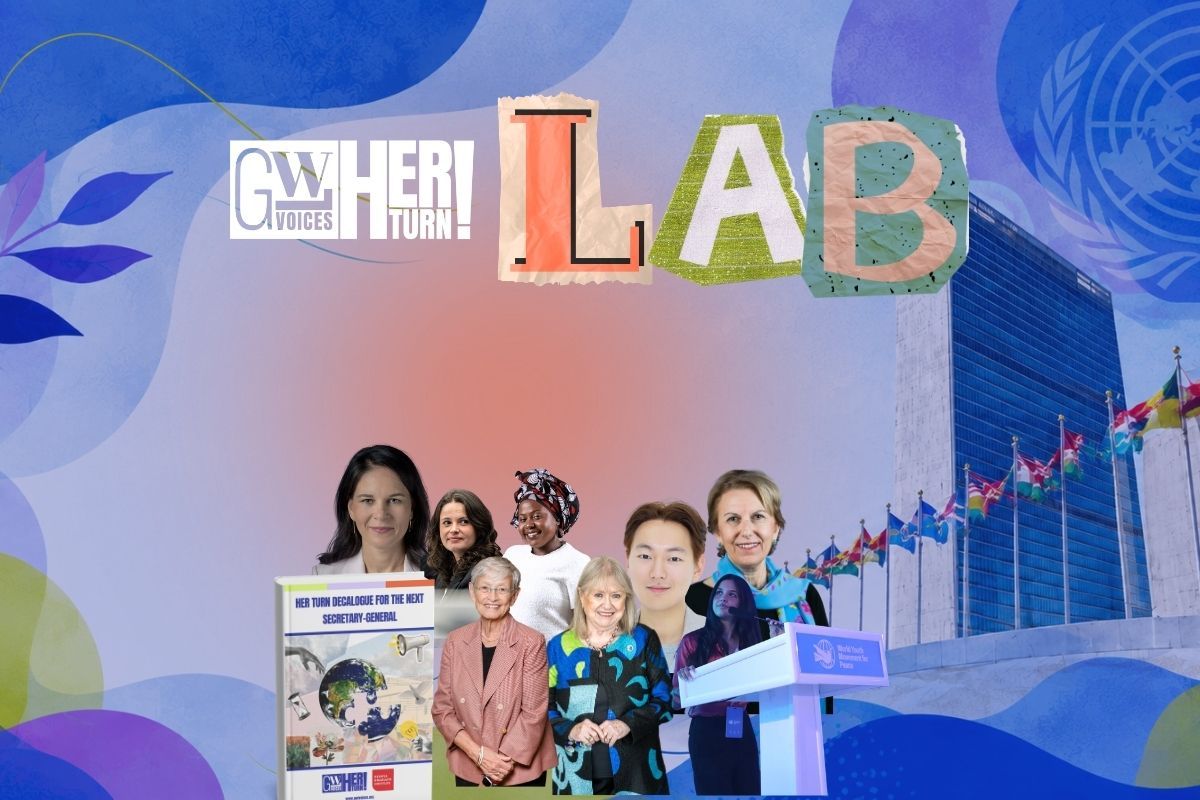
During the 81st United Nations General Assembly, GWL Voices and Columbia University’s Institute for Global Politics at the School of International and Public Affairs (SIPA) convened the HER TURN Leadership Lab: From Principles to Practice — Designing the Next Generation of Multilateral Leadership.
The session brought together senior leaders, young advocates and students to examine what the next generation of multilateral leadership should look like — and, importantly, to translate those ideas into concrete proposals through an interactive Leadership Lab.
Built around the HER TURN Decalogue, developed by a cohort of 30 students in Geneva, the event focused on principles for inclusive global leadership, including meaningful representation, prevention as a foundation for peace, and the participation of civil society and marginalized groups in decision-making.
Opening the session, GWL Voices President and Co-Founder Susana Malcorra introduced the organization’s origins and its commitment to strengthening multilateralism through a focus on women as leaders and agents of change. The discussion set the stage for a broader conversation on how women’s leadership can contribute to reshaping international institutions and decision-making.
The keynote by Annalena Baerbock, former President of the 80th session of the UN General Assembly and former Foreign Minister of Germany, explored the relationship between women’s leadership, power and the future of multilateralism. The conversation highlighted the importance of recognizing the generations of women who have advanced rights and opened pathways for those who followed, while also addressing the expectations placed on women who reach positions of leadership. A key point was the need to avoid treating women leaders as responsible for solving every systemic challenge simply because they are women.
A panel bringing generations together
Moderated by Yasmine Ergas, Director of Human Rights, Gender & Equity at Columbia University, the panel brought together senior leaders and young advocates, including Carol Bellamy, GWL Voices member and former Executive Director of UNICEF; Jocast Samuel, Policy & Innovation Specialist at Girl Move; Zoya Kalinsky, UNICEF Youth Advocate and Founder of the UnitEd Youth Council; and Léa Tricaud, NYU alumna and HER TURN Rapporteur from the Geneva cohort that co-authored the Decalogue.
The discussion focused on the difference between representation and meaningful participation, highlighting that having women and young people present in decision-making spaces is not sufficient without the power to influence decisions and shape outcomes.
Participants also explored the role of disruption in advancing institutional change, with the conversation emphasizing the importance of questioning established approaches and being willing to challenge existing structures when pursuing more inclusive forms of leadership.
The role of young people emerged as another central theme. The panel highlighted that youth participation should not be framed solely around future leadership, but around the contributions young people are already making to political and institutional debates.
The conversation also connected these themes with the principles developed through the HER TURN Geneva cohort and its Decalogue. The discussion stressed the importance of moving beyond symbolic representation towards meaningful participation at every stage of decision-making — from designing and developing ideas to shaping priorities and taking decisions with real influence.
The Leadership Lab: turning discussion into action
The defining feature of the event was the Leadership Lab that followed the panel.
Rather than ending with a conventional Q&A, students broke into small working groups and were asked to take the principles discussed during the session and work through how they could be applied in practice.
Each group identified one priority for the next Secretary-General, one recommendation for Member States, and one commitment that young people could advance themselves.
The working groups developed concrete proposals around participation, prevention and coalition-building.
On meaningful participation, participants called for a shift from simply including marginalized groups towards co-design and co-creation, ensuring that communities are involved in shaping decisions rather than simply being represented in the room. They also identified access to resources, information and decision-making spaces as key barriers to meaningful participation.
On prevention and peace, participants discussed proposals including greater participation of women in peace negotiations, stronger support for UN Women, and approaches connecting development assistance with disarmament and gender-responsive decision-making.
The groups also emphasized the value of strengthening existing coalitions around common ground, rather than continuously creating new structures.
Designing a multilateralism that delivers
The event concluded with reflections from Joon Baek, Next Generation Prosperity Fellow and contributor to the United Nations Foundation's “World's Toughest Job” campaign.
Drawing on research involving approximately 5,000 young people, it was highlighted the importance of making multilateralism visible and relevant to younger generations.